Bet Behind Streak Play: The Core Mechanic Unmasked
Streak betting is not a side wager; it is a parasitic liquidity strategy that latches onto a live shoe's momentum, and the join mechanism is brutally simple once you strip away the casino's cosmetic interface. You are not betting on the next hand in isolation. You are buying a fractional position in another player's hot hand, and the house takes a cut for the privilege. The real question is how the platform routes your stake, what the house edge does to your expected value, and whether the table's RNG or physical shuffle is actually producing the streak you think you see. 🎲
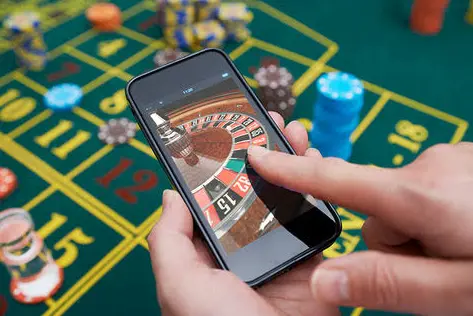
How the Join Process Actually Works
On most live-dealer and electronic table platforms, the join button appears the moment a player wins three consecutive hands. You tap it, choose a stake amount, and the system mirrors your wager onto that player's next hand. If they win, you win at the same payout ratio minus a commission that typically runs between 2% and 5% depending on the operator. If they lose, your stake evaporates instantly with no carryover. The critical technical detail is that your bet is locked before the cards leave the shoe, meaning you have zero influence on the outcome and zero information advantage beyond the visible streak itself.
This is where the bet behind streak play mechanism diverges from a standard side bet. The platform is not offering you odds on a random event. It is offering you exposure to another player's decision-making pattern. If that player is a skilled basic strategy devotee, you are effectively riding their edge. If they are a drunk tourist chasing a gut feeling, you are subsidizing the house's bottom line. The join function does not discriminate.
The Algorithmic Reality Behind Streak Detection
Here is the part most players never see. The streak counter is not a neutral observer. It is a retention tool. Platforms tune the threshold for triggering the join prompt based on real-time table activity, and the shorter the streak requirement, the more frequently the button appears. A three-hand trigger generates far more engagement than a five-hand trigger, even though the statistical significance of a three-hand streak is essentially noise. The algorithm knows this. It also knows that players who join streaks tend to increase their average bet size by 40% to 60% compared to their flat-bet baseline, which is exactly what the house wants.
The hardware side is equally cynical. On electronic tables, the RNG seed is refreshed after every hand, meaning each outcome is independent and the streak has zero predictive value. On live-dealer tables, the shuffle is either continuous or penetration-based, and the streak is a product of card clustering that may or may not persist into the next hand. The join mechanism treats both environments identically, which is a fundamental flaw in how the feature is marketed. 🃏
The House Edge Trap in Streak Wagering
Let us talk numbers because the math does not care about your feelings. A standard baccarat hand carries a house edge of roughly 1.06% on the banker bet and 1.24% on the player bet. When you join a streak, the platform adds a commission that pushes the effective house edge to somewhere between 3% and 6% depending on the operator's configuration. That is a three-to-five-fold increase in the cost of every dollar you wager. Over a thousand hands, that difference is the gap between a manageable loss and a catastrophic drawdown.
The streak itself does not reduce the house edge. It does not increase your probability of winning. It does not give you access to card-counting information or shuffle tracking data. What it does is create an emotional feedback loop that makes you feel like you are part of something, like you are riding a wave instead of standing on a beach watching the tide come in. That feeling is the product. The join button is the checkout counter.
Who Should Actually Use This Feature
If you are a disciplined advantage player with a verified edge in a specific game, streak joining is a distraction that dilutes your expected value and introduces unnecessary variance. If you are a recreational player who understands that you are paying for entertainment, the feature is harmless as long as your stake sizing is conservative and your stop-loss is hard-coded into your session budget. The danger zone is the player who believes the streak means something, who thinks the algorithm is on their side, who joins because the button is there and the last three hands were green.
That player is the target demographic. That player is why the feature exists. 🎯

The commission structure alone should tell you everything. On a fair game with no streak premium, you would pay the standard house edge. On a streak-joined hand, you pay that edge plus a surcharge for the privilege of participating in a pattern that has no mathematical predictive power. The platform is not selling you an edge. It is selling you a seat at a table where the odds were already against you and the price of admission just went up. The streak counter resets after every loss, which means the feature is designed to keep you cycling through join prompts until your bankroll is gone or your discipline kicks in.